Design guide
Vertical or horizontal panel siding?
See how the direction of your siding changes the character of your exterior.
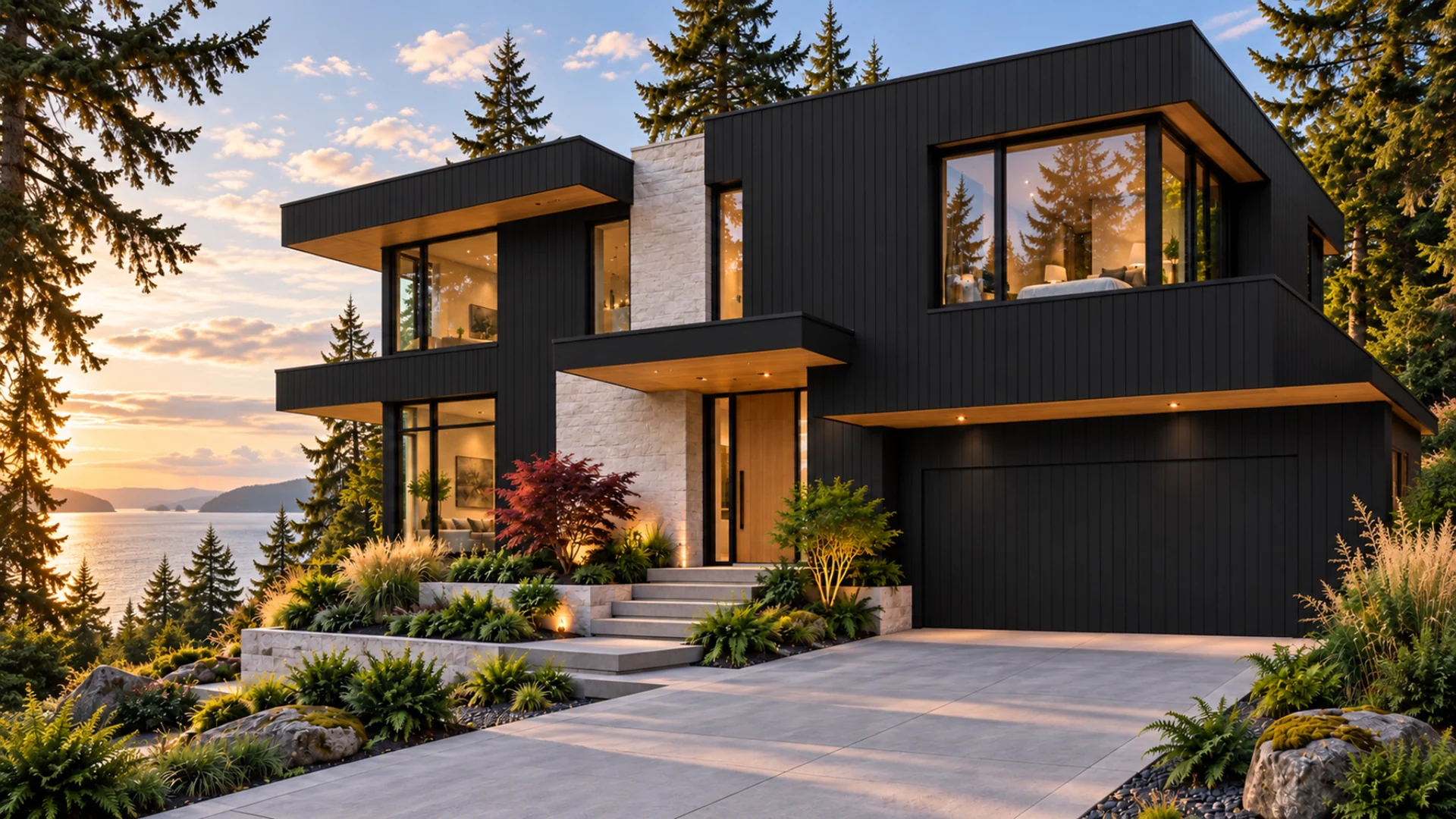
The direction of panel siding changes the way we read a building. Even within one colour palette, vertical and horizontal lines can create noticeably different impressions. Consider the shape of your home, the position of its windows and the areas you want to emphasize before deciding on a layout.
Use vertical lines to draw the eye upward
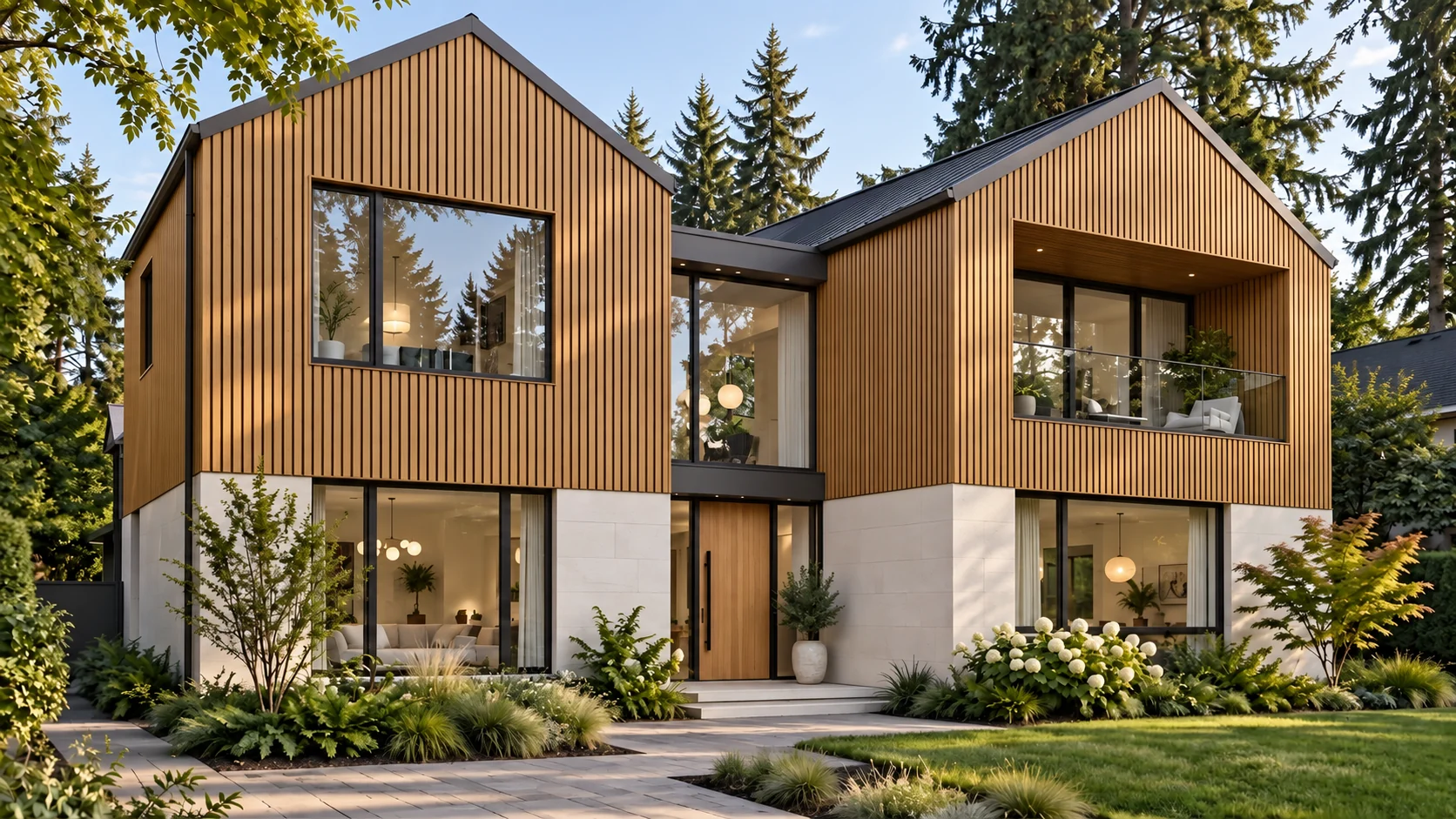
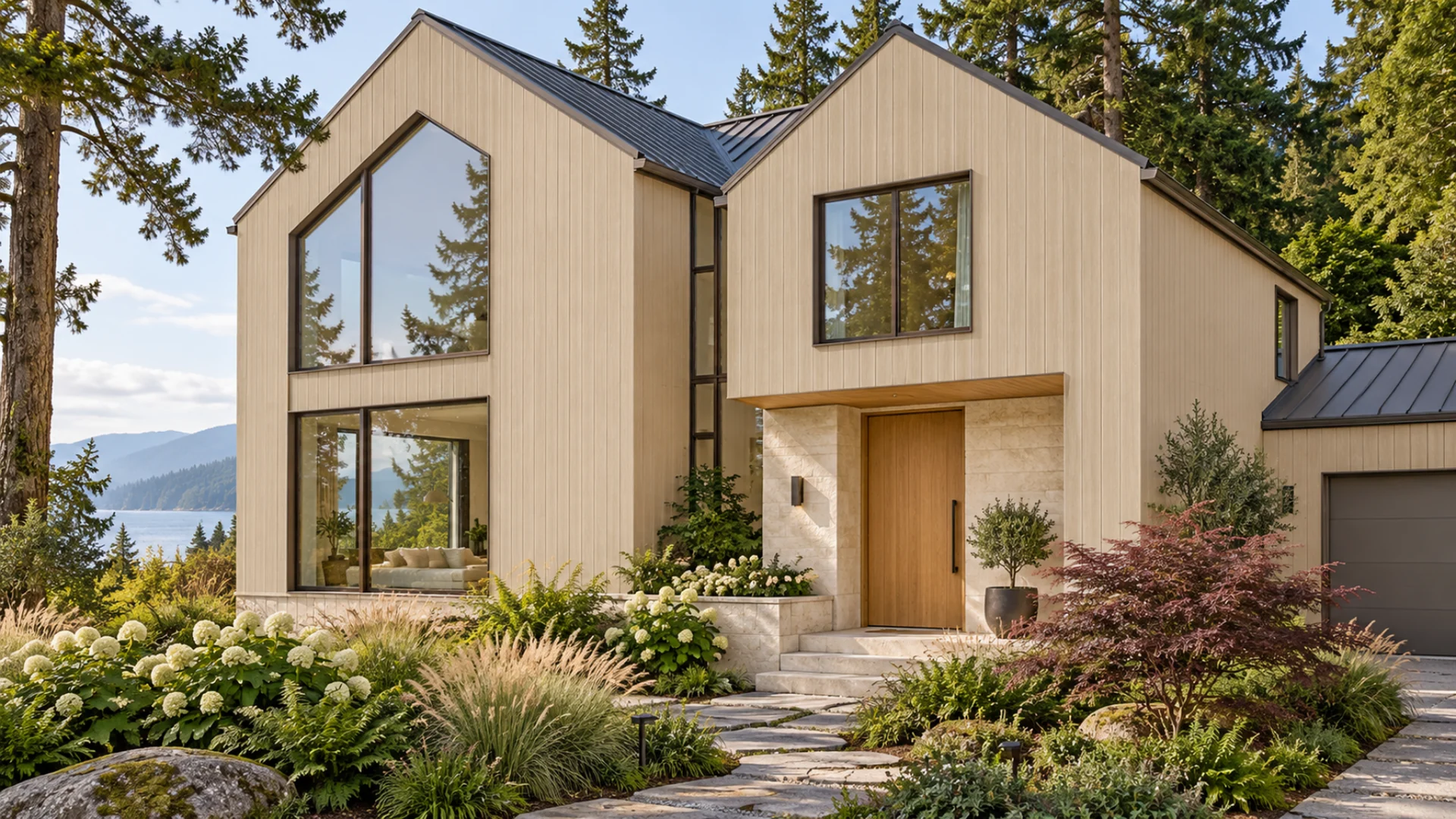
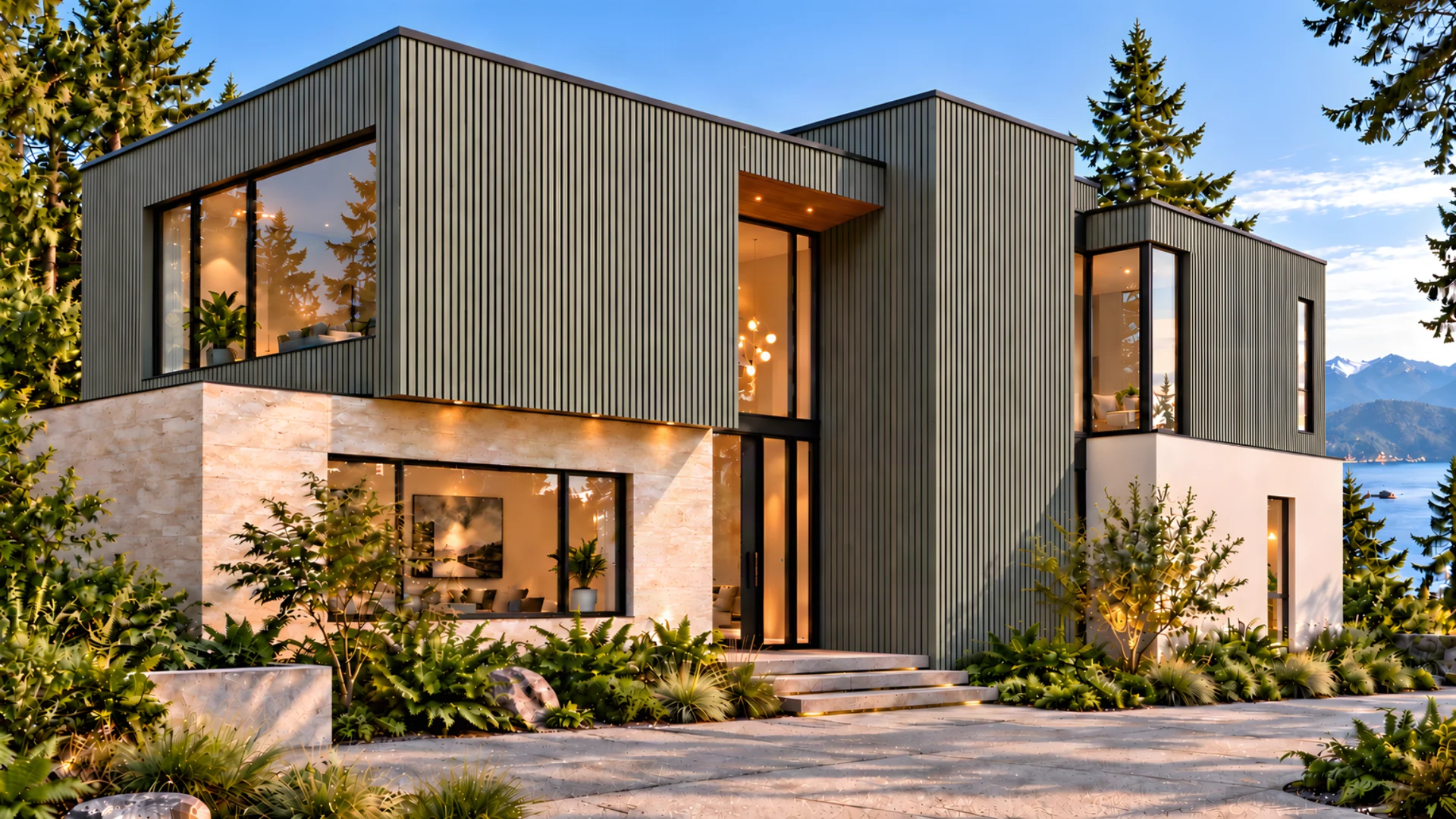
Vertical panel siding can emphasize height and give a gabled wall, narrow entrance or tall façade a contemporary rhythm. Look for opportunities to relate the board direction to window proportions and architectural openings. A restrained colour palette allows those lines to become the main design feature. Darker tones can add definition; lighter finishes can create a softer expression.
Use horizontal lines for a grounded look
Horizontal panel siding can give a home a wider, more settled appearance. It can work particularly well with long rooflines, broad windows and familiar traditional forms. Align changes in materials with clear architectural boundaries so the exterior feels organized. NeoLine’s flat panel profile and brushed texture provide a clean surface for either design direction.
Make the decision at the scale of the whole home
Compare both directions on an elevation drawing or visualization, rather than judging from a small sample alone. Keep the roof, windows and surrounding materials visible while you compare. Once the design is chosen, confirm the approved orientation, substructure and fastening method for your selected NeoLine profile. Your installer can turn the visual idea into a coordinated plan for boards, joints and trims.